Imaginary numbers

A solution to the simple second-degree equation

x2 + 1 =0

can not be found along the line of real-numbers.

Therefore it was necessary to invent a fictive number i such that i2=-1.

i.e. the imaginary numbers making it possible to take the square root of negative numbers.

They are represented along an axis horizontal to the axis of real numbers.

A combination of a real number and a imaginary number is called a complex number.

z = 2  + 3i.
Publicerat i matematik 1c, matematik 4, matematik 5 | Märkt , , , | 2 kommentarer

The first man on the Moon

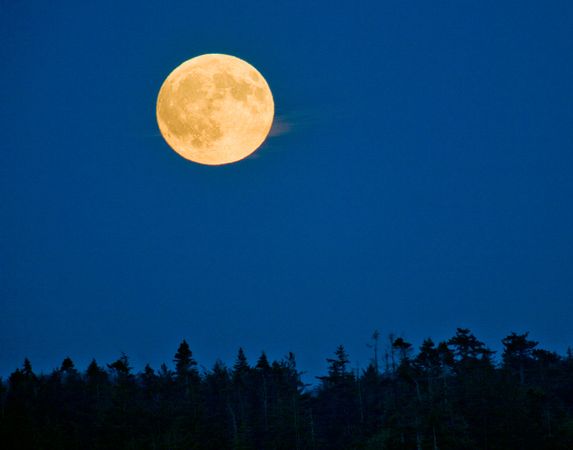
Full moon

Last week the first human ever to set a foot on the Moon, Neil Armstrong (born 1930) expired.

His family wrote wrote this as a final tribute:

”For those who may ask what they can do to honor Neil, we have a simple request. Honor his example of service, accomplishment and modesty, and the next time you walk outside on a clear night and see the moon smiling down at you, think of Neil Armstrong and give him a wink.”[

Publicerat i Astronomy | Lämna en kommentar

Bessel functions

Friedrich Wilhelm Bessel (1784-1846)  was an outstanding mathematician and astronomer in the 19 th. century. Professor at the Albertina university in the no longer existing town of Königsberg. He was the first astronomer to use the parallax of a star for distance measurements. He also pinned down the positions of 50 000 stars.

In pure mathematics his major achievement is to have deduced the Besselfunctions which are solutions to the Bessel differential equation.

x^2 \frac{d^2 y}{dx^2} + x \frac{dy}{dx} + (x^2 - \alpha^2)y = 0
The solutions are given by
J_n(x) = \frac{1}{\pi} \int_0^\pi \cos (n \tau - x \sin \tau) \,\mathrm{d}\tau.
This equation is encountered in electromagnetic wave-propagation problems and in quantum mechanics when solving the Schrödinger-equation.
Publicerat i Calculus | Märkt , | 2 kommentarer

Line integrals

The line integral along the curve C can be written as
\int_C f\, ds = \int_a^b f(\mathbf{r}(t)) |\mathbf{r}'(t)|\, dt.
where C is parametrisized as r(t) with the parmeter t.

∫¦r'(t)¦ dt equals the arc length i.e. the length of the curve.

Consider eg the circle.  x2+ y2 = r2. This can be parametrisized as follows

x(t) = cos(t)

y(t) = sin(t)

The perimeter of the circle can then be calculated according to

∫ sint2+cos2t dt= 2π
0

Publicerat i Gymnasiefysik(high school physics), matematik 5 | Lämna en kommentar

Exercises on the masterclass

Exercises

Publicerat i Uncategorized | 2 kommentarer

Zeno’s paradoxes

Zeno of Elea

It is impossible to arrive at any destination since at first you have to travel half the distance and then half the remaining distance and so on.

This means you have to travel an infinite number of half-distances which ought to take infinitely long time.

Read more about his paradoxes here

Publicerat i Gymnasiematematik(high school math), Uncategorized | Märkt , | 2 kommentarer

Shooting stars

Perseid meteor shower

The perseids is a meteor shower connected to the comet Swift-Turtle. This picture shows this year’s Perseid shower photographed over Wirkenheim in Germany.

http://en.wikipedia.org/wiki/Perseids

Publicerat i Astronomy | Lämna en kommentar

Human achievement and technological triumph

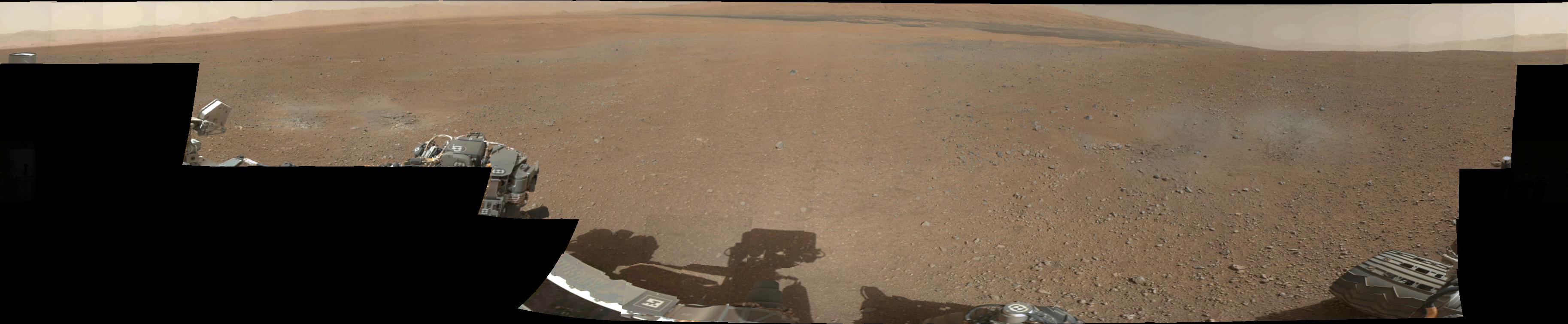
Last Monday August 6 th. a human made automobile called ‘Curiosity ‘ landed on the surface of planet Mars. Even though it is our closest neighbour the journey lasted for 36 weeks.  It defied the ‘Mars curse’ and the landing was successful.

It has no sent its first pictures from this frozen world. Horizons never seen by the human eye.

Panorama from Mars 10th of August 2012.

Publicerat i Astronomy | Lämna en kommentar

Masterclass in mathematics

Masterclass summer 2012.

Last week I supervised a masterclass in mathematics for 18 -years olds at Spyken Gymnasium in Lund.

The subject was plane euclidean geometry.

Above is a picture of the participants.  Which includes memebers of the Swedish IMO team

Rdio interview: click here

Publicerat i Uncategorized | Märkt | Lämna en kommentar

Chord-tangent theorem

The measure of the angle formed in the intersection between the chord of a circle and the tangent to the circle is the same as the angle at the periphery of the circle.

Click here to se the proof

Publicerat i Geometri, Gymnasiematematik(high school math), matematik 1c, Uncategorized | Märkt , | Lämna en kommentar